April 12, 2026 • By Childing Team
The Root of All Love: Why True Compassion Begins with Our Parents
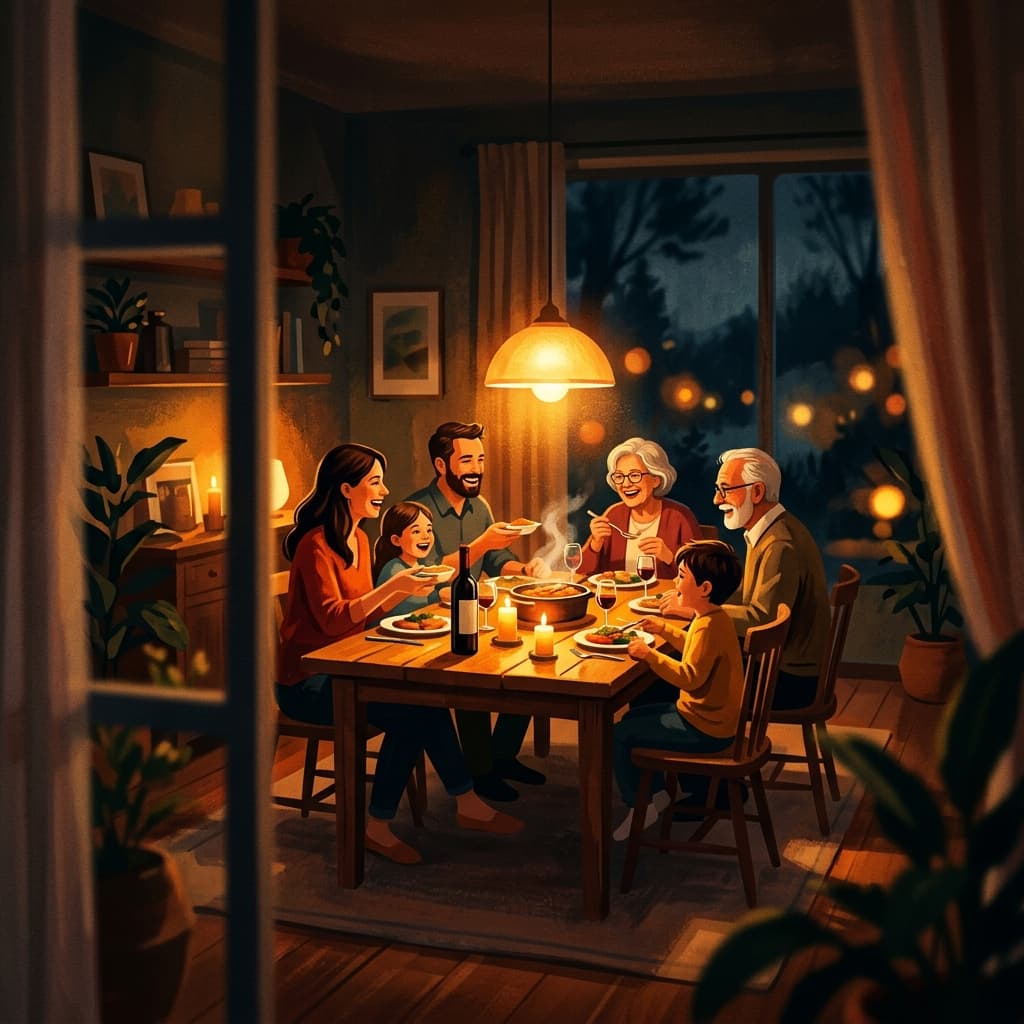
Because our parents are the very first people we encounter when we enter this world, they are undeniably the first people who love us, and the first people we are tasked to love in return.
This primal relationship acts as the blueprint for every other connection we will ever form. The way we view our parents fundamentally shapes how we view humanity. In Chinese culture, there is a profound saying that captures this reality: 立爱自亲始 (Love Starts from Loving Our Parents).
To understand why this is the foundational principle of childing, we must look at both the ancient philosophical wisdom that defined it, and the modern psychology that proves it.
The Wisdom of the Classic of Filial Piety
In the Classic of Filial Piety (《孝经》), there is a powerful quote that warns against the hypocrisy of loving the world while neglecting one’s own family:
> "不爱其亲而爱他人者 谓之悖德; 不敬其亲而敬他人者 谓之悖礼"
>
> "He who does not love his parents, but loves other men, is called a rebel against virtue. He who does not revere his parents, but reveres other men, is called a rebel against propriety."
At first glance, this statement might seem remarkably strict, but its underlying logic is profound: Anyone who claims to love their neighbor more than their father or mother is operating against human nature.
The logic is simple. If a person cannot muster love, patience, and respect for the very individuals who gave them life and nurtured them through their most vulnerable years, any love they extend to a stranger is fundamentally shallow. How can one claim to be a champion of empathy and kindness to the outside world, while harboring resentment or apathy within their own home? True moral virtue radiates outward; it must begin at the center.
Modern Psychology: The Science of Secure Attachment
What ancient philosophers called "human nature" and "virtue," modern psychologists now call Secure Attachment Theory.
Science overwhelmingly supports the ancient belief that the stronger and healthier the parent-child relationship, the better the individual's future upbringing, personality, and values.
- Emotional Regulation: Children who cultivate a healthy relationship with their parents are significantly better at regulating their emotions when faced with stress and difficult situations later in life. They draw upon the well of security planted in their childhood.
- Positive Social Behaviors: A secure attachment promotes immense cognitive, emotional, and social development. When children and adults feel securely tethered to their parents, they exhibit far higher rates of positive social behaviors toward strangers.
- Building Future Bonds: Because the parent-child relationship is the template for love, those who actively practice childing are far more likely to develop secure bonds and friendships with peers. They understand deeply how to listen, how to honor, and how to forgive.
The Path to Success is Paved at Home
The healthy involvement of parents in their children’s day-to-day life—and the reciprocal, loving involvement of adult children in their aging parents' lives—ensures that individuals perform better socially, academically, and professionally.
We learn essential skills and values at home that set us on the path for future success. It is indeed a universal truth: if we wish to bring peace, compassion, and deep empathy to the world, we must first master the art of bringing it to our mothers and farthers. Love, in its most genuine and powerful form, will always start at home.