April 21, 2026 • By Empress Dowager Cixi (Translated by Childing Team)
The Iron Empress Weeps: Cixi's Poem on the Agony of a Parent's Heart
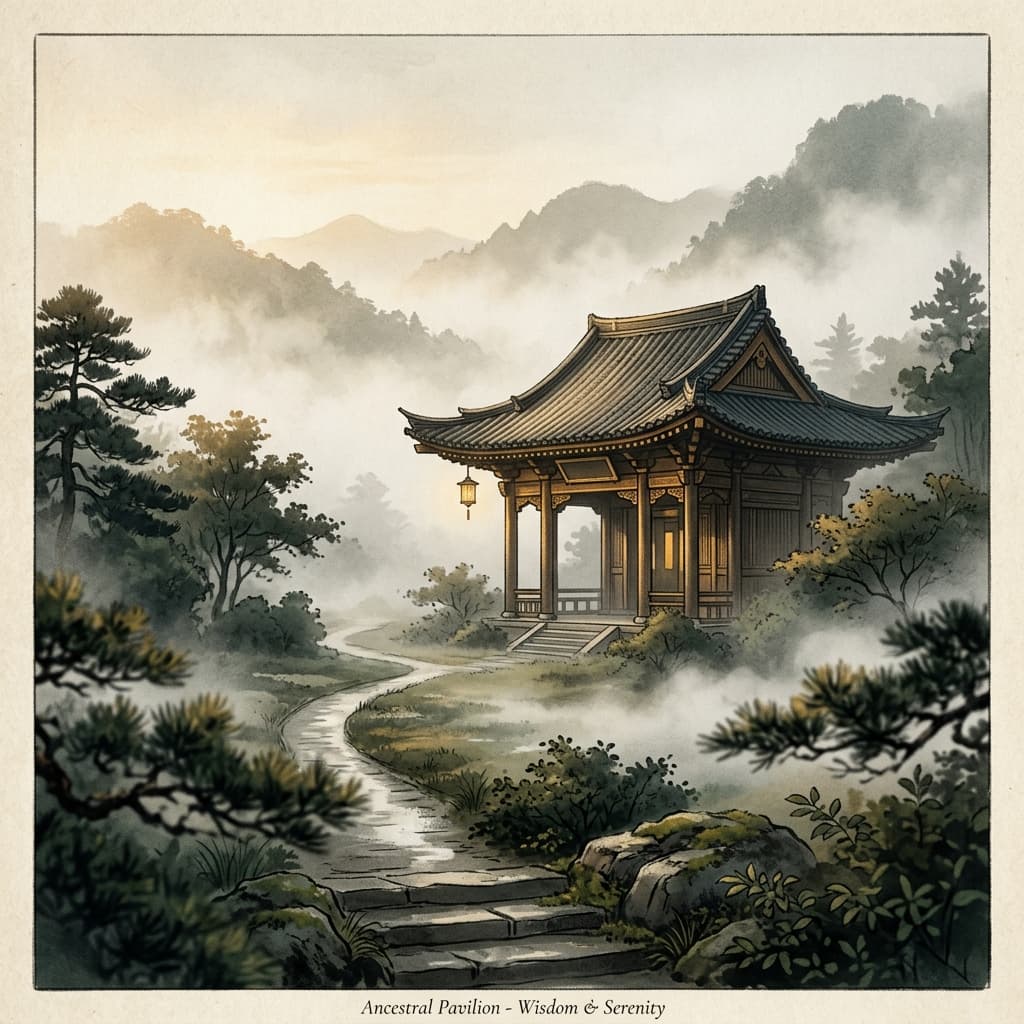
To the Western world, Empress Dowager Cixi (慈禧太后) is often remembered as one of the most ruthless, Machiavellian, and iron-fisted political figures in history. She effectively controlled the Chinese empire for 47 years during the late Qing Dynasty, navigating massive scale wars, rebellions, and the collapse of imperial rule. She was not a woman known for her softness.
However, beneath the armor of the imperial throne, Cixi was a daughter.
When her mother's 70th birthday arrived, Cixi was trapped in the capital, utterly overwhelmed by state affairs and emergency meetings with foreign envoys. Because she could not physically attend the birthday banquet, she refused to simply send a pile of hollow imperial gold. Instead, the Iron Empress sent a handwritten poem.
The final line of this poem—Kělián tiānxià fùmǔ xīn—is so profoundly devastating that it has broken free from history to become one of the most widely used idioms in modern Asian culture today.
Because literal translations of ancient Chinese poetry often lose their emotional gravity, we have translated Cixi's masterpiece using Western poetic logic to ensure you feel the absolute, grinding weight of her words.
祝母寿诗 (A Poem to Celebrate My Mother's Birthday)
Of all the love upon this earth, a parent’s love is the purest truth,
Their tears and literal blood are dissolved to forge the physical flesh of you.
They grind their minds and bodies into dust, entirely for the sake of their child,
Oh, what agonizing, exquisite pain it is, to carry the heart of a parent!
The Breakdown of the Logic
To fully understand why this poem became a cultural monolith, we must look at the specific language Cixi chose:
1. "Of all the love upon this earth..." (世间爹妈情最真)
Cixi opens with a sweeping, absolute declarative statement. In a dangerous imperial court filled with concubines, generals, and political allies, she knew firsthand that almost every form of love and loyalty on earth is transactional or conditional. Out of all the complex human relationships she managed over 47 years as Empress, she concludes that the only love that is organically pure and perfectly true is the love between a parent and a child.
2. "Their tears and blood dissolve into the flesh..." (泪血溶入儿女身)
Cixi does not use abstract concepts. She uses terrifying biological math. She points out that a child’s physical body isn't just "given" to them; it is literally built out of the dissolved cellular energy, the lost sleep, the tears, and the blood of the mother. You are walking around in a body financed entirely by your parents' physical decay.
3. "They grind their minds and bodies into dust..." (殚竭心力终为子)
The original Chinese uses 殚竭 (exhaustion to the point of collapse). Cixi recognizes that parenting is not a hobby. It is an act of total, unrelenting depletion. A parent gives and gives until there is functionally nothing left.
4. "Oh, the agonizing pain..." (可怜天下父母心)
In modern times, the word 可怜 (Kělián) often translates to "pitiful" or "pathetic." But in ancient poetic logic, it means something closer to a staggering, overwhelming sympathy.
Cixi looks at the sheer volume of anxiety, sacrifice, and terror that parents endure to keep their children alive, and her heart breaks. She concludes that to carry the heart of a parent is the most agonizing, beautiful, and merciless task a human being can undertake.