April 21, 2026 • By Childing Team
The Journey of Childing: The 7 Phases of Filial Love

Just as "parenting" is an active, ongoing verb that defines the lifelong dedication of raising a human being, "Childing" is the complementary journey. It recognizes that being a child is an active role that requires intention, effort, and continuous growth.
However, the way we practice filial piety at age five is vastly different from how we practice it at age fifty. True "Childing" is dynamic. It evolves alongside our biology and our life circumstances.
To truly understand this journey, we must look at the math of aging across three generations. When we reach adulthood, our parents are often entering their twilight years, and our grandparents represent our immediate future.
The Mathematics of Multigenerational Aging
| Life Phase / Event | Your Age | Your Children's Age | Parents' Age | Grandparents' Age |
| :--- | :--- | :--- | :--- | :--- |
| Birth | 0 | - | 25 - 30 | 50 - 60 |
| Leaving Home / College | 18 - 20 | - | 45 - 50 | 70 - 80 |
| Marriage / Starting a Career | 25 - 30 | 0 (Newborns) | 50 - 60 | 75 - 90+ (Great-Grandparents) |
| Sandwich Phase (Having Kids) | 30 - 35 | 1 - 10 | 55 - 65 | 80 - 95+ |
| Empty Nest / Caregiver Pivot | 50 - 60 | 18 - 30 | 75 - 90+ | Likely Passed |
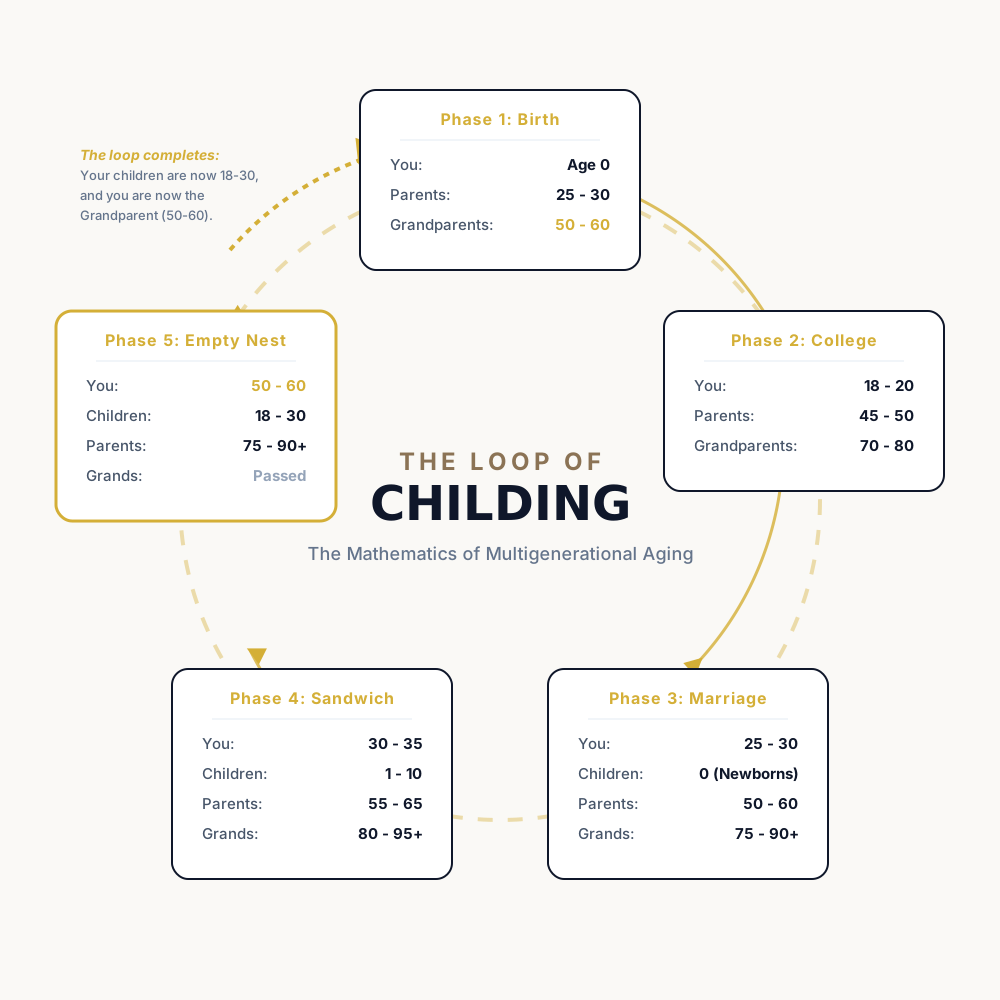
Here is the grand, lifelong journey of Childing, broken down into the seven phases of human life:
Phase 1: The Kid (Learning Obedience and Respect)
The journey begins in early childhood. At this stage, the primary expression of filial piety is simple obedience and deep respect. Especially in multigenerational households, a young child's duty is to listen to the guidance of both their parents and their grandparents. By submitting to authority and learning the basic rhythms of respect, the child plants the seeds of a healthy ego and social competence that will serve them for life.
Phase 2: The Teenager (Cultivating Character)
As the child physical matures into a teenager, filial piety shifts from simple obedience to active cultivation. The teen's duty is to learn new things, study diligently, and develop sound moral character. At this stage, a teen honors their parents by staying out of trouble, respecting the immense financial and emotional sacrifices the parents are making for their education, and preparing to become a capable adult.
Phase 3: The Young Adult (Navigating Independence)
This phase looks drastically different depending on the culture. In places like America and the broader West, the young adult often moves out to establish total financial and physical independence. In many other parts of the world (like Asia and the Middle East), the young adult generally continues to live at home with their parents while working. Regardless of geography, the goal of Childing here is the same: to transition from a dependent to a peer, offering emotional support, financial contributions, and deep consultative respect to the parents.
Phase 4: After Marriage (Blending Families)
When a young adult marries, the scope of filial piety instantly doubles. The individual is no longer just responsible for their own parents; they must extend equal filial respect to their parents-in-law. In many global cultures, the newlywed couple continues to live in a multigenerational household with the parents or in-laws. Childing at this phase requires immense diplomacy, patience, and the beautiful blending of two distinct family histories.
Phase 5: The "Sandwich" Family (Becoming Parents)
This is often considered the most exhausting and profound phase of the journey. The adult child now has children of their own. They are "sandwiched" between two massive responsibilities: raising their young offspring while simultaneously managing the increasing needs of their aging parents. Childing here requires balancing extreme logistical pressures, but it is also the phase where the adult child truly comprehends the sheer magnitude of sacrifice their parents made for them decades prior.
Phase 6: The Empty Nest (The Primary Caregiver)
The grandchildren have grown and left the home. The house is quiet again. At this phase, the parents have usually reached extreme old age and frailty. The adult child now transitions into the role of primary caregiver. The biological roles officially reverse. The adult child must now practice "victual respect" (feeding them), physical care, and immense emotional patience. This is the ultimate crucible of the Childing journey—serving the helpless parents with the exact same unconditional love the parents used to serve the helpless infant.
Phase 7: After Passing (Inheriting the Legacy)
The final phase of filial piety begins after the parents die. In the Childing philosophy, your duty to your parents does not end at their funeral. The adult child is now fully responsible for carrying the family legacy forward. They must honor their parents' memory, fulfill their uncompleted dreams, and live a life of profound moral integrity. By doing so, they become the ultimate role model, ensuring that their own children observe their dedication, thus perpetuating the beautiful, unbroken cycle of filial piety into the next generation.