April 21, 2026 • By Childing Team
Returning to the Root: Exploring the Taoist Logic of Filial Piety
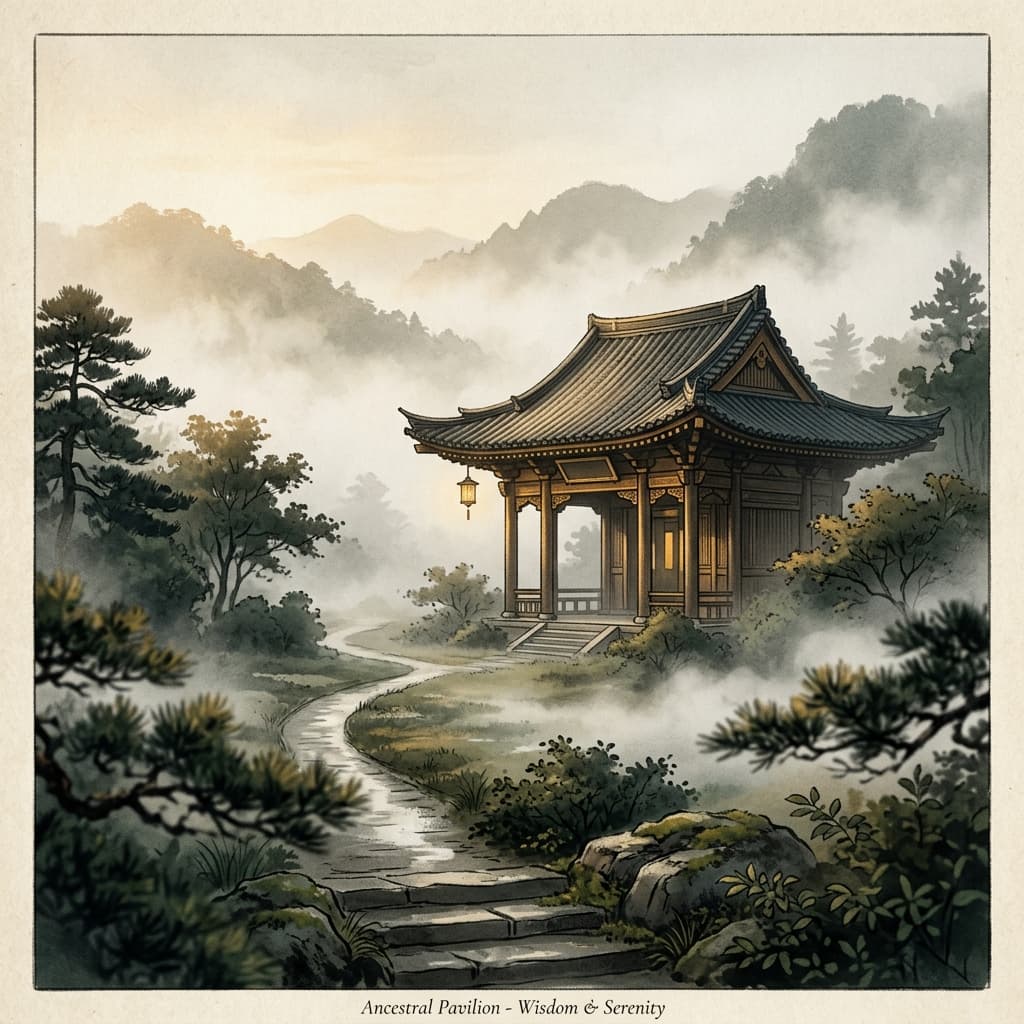
When examining the philosophy of East Asia, many people immediately point to Confucianism as the ultimate authority on filial piety. However, the ancient philosophy of Taoism (Daoism) provides a breathtaking, entirely different logic for honoring one's parents.
While Confucianism often relies on strict societal hierarchies, rules, and duties, Taoism rejects rigid checklists. Instead, Taoism views filial piety as an organic, almost biological alignment with the natural forces of the universe. Here is the elegant logic of "Childing" according to the Dao:
1. Ziran (Spontaneous Nature)
In Taoist philosophy, the ultimate goal of a human being is to live in a state of Ziran (spontaneous, organic naturalness).
Taoists historically criticized Confucians for turning filial piety into a stressful, bureaucratic checklist. According to Taoist logic, you should not honor your parents simply because a book of laws demands it. You should honor them because it is the overwhelmingly natural, organic response of a healthy soul. Just as it is natural for a river to flow downward, and for a tree to reach for sunlight, it is the fundamental nature of a child to feel boundless gratitude for the beings who gave them life. If you have to be forced to love your parents, you have lost touch with your own true nature.
2. Returning to the Root (Fu)
A central theme in Laozi’s famous text, the Daodejing, is the concept of "Returning to the Root" (Fu). The text asserts that all things in the universe eventually wither and return to the deep soil from which they came. Finding peace in life requires acknowledging and deeply respecting your origins.
From a practical perspective, your parents are your literal, physical roots. To reject them, despise them, or abandon them is an attempt to sever yourself from your own origins. A tree that hates its own roots cannot possibly produce fruit; it can only wither. To be at peace in the universe, an adult child must deeply honor where they came from.
3. The Flow of the Cosmic Cycle
Taoism is obsessed with the cyclical nature of the universe—day turns to night, winter turns to spring. Life is not a straight line of permanent independence.
When you were an infant, you were physically helpless, and the natural flow of the universe required your parents to expend their physical energy to sustain you. When your parents reach extreme old age, the cycle naturally reverses. They become frail, and the cosmic current requires you to expend your energy to sustain them. Fighting this reversal—by outsourcing their care because it disrupts your busy, individualistic modern life—is viewed as fighting the Dao itself. It creates psychological chaos.
4. Wu Wei in Eldercare
Perhaps the most famous concept in Taoism is Wu Wei (effortless action, or acting without forcing).
Caring for aging, difficult, or sick parents is unimaginably stressful. However, Taoist logic teaches the child to approach this care with Wu Wei. This does not mean doing nothing; it means serving them without intense resentment or ego. Instead of being frustrated that your parents are slowing down, you accept their aging as a deeply natural part of the cosmic cycle. You serve them smoothly, quietly, and gently, matching the exact rhythm of their twilight years.
Ultimately, Taoism teaches that "Childing" is not a burden you carry. It is the natural rhythm of the universe breathing in and out.