April 18, 2026 • By Zhu Ziqing
The Retreating Figure: A Father's Silent Love
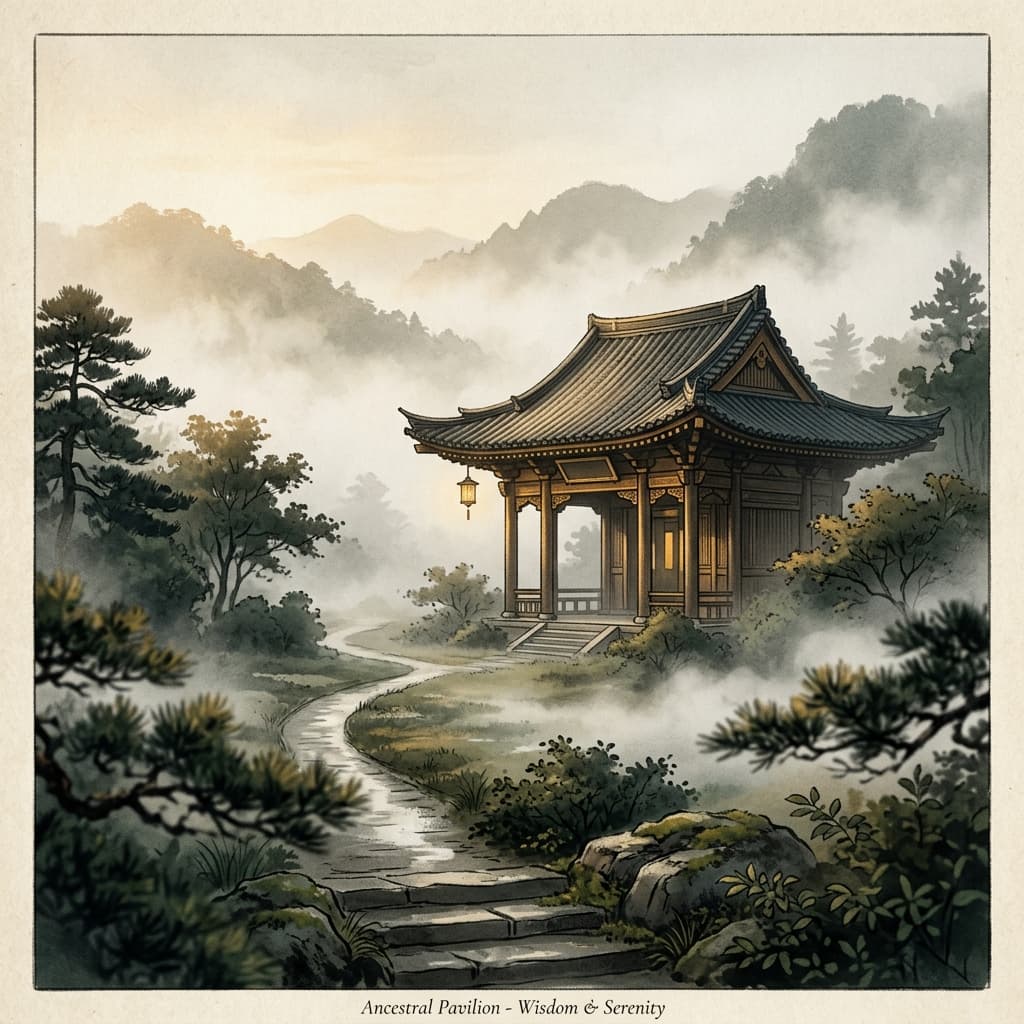
This is a renowned reminiscence prose written in 1925 by Chinese poet and essayist Zhu Ziqing. While on the surface it captures the mundane event of his father sending him off at the Nanjing Pukou Train Station, its true meaning lies deeper. It is a story about the profound reconciliation between an estranged son and his aging father. Told from the point of view of a son looking at his father's retreating figure, it captures the exact moment the son overcomes his own youthful arrogance and finally understands his father's struggles, bridging the emotional distance that had grown between them.
I haven't seen my father since he sent me off at the Nanjing train station over two years ago. I have never forgotten that day, how he cared for me, and the deep emotional weight of his retreating figure.
That winter, my grandmother passed away and my father lost his job. Bad things come in pairs. It was a hard time for my family. I had to travel from Beijing to Xuzhou to join my father immediately so we could return together to our home in Yangzhou for grandma's funeral. When I met father in Xuzhou, I cried when I saw his place messy and unattended, overcome by the thought of losing my grandmother.
Father comforted me saying, "What had happened has happened. Don't cry. Things will get better. There will always be a way out."
After arriving home, father sold some family property to clear debts and borrowed some money to hold the funeral. These were incredibly tough times; the funeral was ongoing and father had absolutely no income. Afterward, father had to travel to Nanjing to look for a job, and I had to return to my school in Beijing. We both traveled in the same direction to Nanjing together.
I spent the first day in Nanjing touring at a friend's invitation. The next morning, it was planned that I would take a ferry across the Yangtze River to Pukou, where I would take a train to Beijing that afternoon. My father told me he would not be available to see me off at the train station due to his busy schedule. He asked a waiter he had acquainted in the hotel for help, requesting him to accompany me to the station to see me off safely. My father explained the directions to the waiter again and again.
Still, he was not assured that this was a good idea. He weighed it over and over. Actually, he really needn't have worried about me that much. I was 20 years old and had traveled back and forth to Beijing a couple of times. Yet, after a long hesitation, he finally changed his mind. He decided that he would accompany me to the train station himself. I repeatedly tried to talk him out of it, but he simply replied, "Never mind, I do it better."
So, we both took the ferry across the river and reached the train station. When I bought a ticket, father watched my luggage. I had a lot of luggage, so we needed to pay a porter to carry it to the train. Father bargained with the porter over the price. I was such a smart aleck then. I thought I could do a better job negotiating, so I kept chipping in. Eventually, they struck a deal and got me on the train.
Father chose a seat for me close to the carriage door. I unfolded my purple fur-lined coat on the seat and sat down. It was father who had made that coat for me. He asked me to be safe during the trip and to stay alert to keep myself warm at night. He even asked the train attendants to care for me. I sniggered at father for being so impractical—what was the use of entrusting me to strangers who only cared for money? Besides, wasn't I old enough to take care of myself?
Oh, whenever I think of those days, I can see what a smarty pants I was!
"Dad, you've got to go now," I said.
But he looked out the window. "I’m going to buy you some tangerines. You stay here. Don’t move."
I saw several vendors waiting for customers on the other side of the platform. To reach them, one would have to climb down, cross the railway tracks, and climb up the other side. That would be a strenuous job for my father, who was quite overweight. I wanted to do it myself, but he stopped me, so I let him go.
I watched him hobble towards the railway track. He was wearing his black skullcap, black cloth mandarin jacket, and dark blue cotton-padded long gown. He had little trouble climbing down to the railway track, and crossed it. But it was far more difficult for him to climb up to that opposite platform. His hands gripped the upper edge of the platform, his legs huddled up, and his corpulent body tipped slightly towards the left as he made an enormous exertion.
While I was watching him from behind, tears suddenly gushed from my eyes. I quickly wiped them away so he or others would not see me cry.
The next moment I looked out, father was already on his way back, holding bright red tangerines in his arms. In crossing the railway track, he first set the tangerines down, climbed down the platform slowly, and then picked them up again. When he reached the side near my train, I rushed out to help him. I carefully held his arms and we got on the train together.
He laid all the tangerines on my purple coat. He patted the dirt off his clothes and looked deeply relieved. After a while, he said, "I have to go. Write me when you get to Beijing!"
I watched him leave and followed him out to the platform. He walked a few strides and turned back. When he saw me, he gently scolded, "Go back to your seat. Don’t leave your things unattended."
I, however, did not go back to my seat. I gazed at his retreating figure among the crowd of people hurrying back and forth, until I couldn't find his figure anymore. I came back to my seat and cried again.
Over the past two years, father and I have both lived restless, unsettled lives, and the circumstances of our family have gone from bad to worse. Since he was young, father had to leave home to make a living on his own. He went through hard times and made great achievements, doing well in his life until he lost his job while aging. This crushed him. He became sad, depressed, and easily angered. It is understandable that he had a lot of pent-up feelings to release; even family trivia would trigger his anger, and he was not as close to me as before.
However, after two years apart, he realized that he missed me and my son far more than he was angry about anything I had done wrong. Since I arrived in Beijing, he wrote me a letter saying:
> "I’m all right except for a severe pain in my shoulders and arms. It even causes me trouble when eating and writing. Perhaps it won’t be too long before I leave this world."
I cried again while reading these words. Through my glistening tears, I saw his retreating figure one more time—his overweight body wrapped in the dark blue cotton-padded long gown and the black cloth mandarin jacket.
Oh, how I long to see him again!