September 20, 2026 • By Childing Team
An Estranged Son Reunited: The Epic Reconciliation of Duke Zhuang
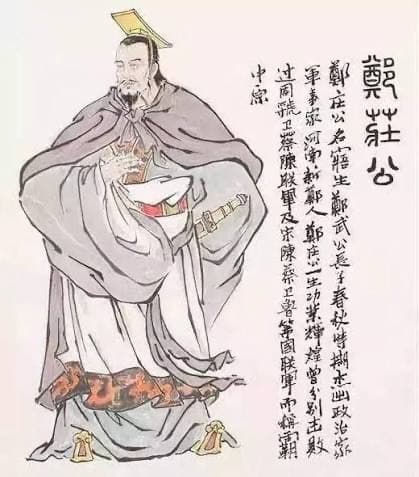
While it is common today to pin the reason for family estrangement on money issues, personality conflicts, or difficult family dynamics, the pain of cutting off a parent is not a modern invention. We can trace the devastating psychological toll of a ruptured parent-child bond back 2,700 years to the Spring and Autumn period of ancient China.
This is the true, legendary story of Duke Zhuang of Zheng and his mother, Wu Jiang—a tale of betrayal, estrangement, and the unavoidable gravitational pull of filial love.
The Roots of Betrayal
Duke Zhuang (born as Wusheng, meaning "difficult birth") was the first of two sons and groomed to inherit the throne. Because she suffered through an extraordinarily painful delivery with him, his mother, Wu Jiang, heavily favored her second son, Gongshu Duan.
When Duke Zhuang ascended to the dukedom, his mother violently objected. Working from the shadows, she began plotting to usurp the throne and install Gongshu Duan into power. She successfully urged the Duke to give his brother a massive fortress city, and then secretly ordered her younger son to stockpile arms, recruit mercenaries, and prepare to rebel. She promised her younger son that she would personally open the gates of the capital for him when the time came.
The Great Rebellion and the Vow
Duke Zhuang's ministers urged him to attack his brother, but the Duke repeatedly refused, stating he could not bear to take up arms against his own flesh and blood. However, when the rebellion finally ignited, the Duke's forces easily overpowered the demoralized rebel army.
With nowhere to run, the younger brother committed suicide. Upon finding his brother's corpse, Duke Zhuang wept bitterly, crying out: "You knew that your older brother would always forgive you; why has it come to this?"
Aghast at his mother’s ultimate betrayal in orchestrating the civil war, the Duke immediately placed her under strict, permanent confinement. Boiling with anger, he made a fierce and famous vow to her: "We will not meet again until we are under the ground!"
The Agony of Estrangement
For a short time, the Duke lived without his mother in his life. But soon, the reality of the estrangement set in.
Cutting a parent out of your life—even one who has committed an egregious wrong—is a gut-wrenching experience. For Duke Zhuang, it provoked profound feelings of shame, guilt, bewilderment, and hurt. He began to miss his mother deeply.
On top of the internal pain, the societal judgment was enormous. Estrangement arouses people’s worst suspicions, leaving both the adult son and the mother feeling relentlessly judged by friends and the public. We often forget that in these situations, the estranged parents left behind are extraordinarily vulnerable. They feel entirely powerless when no contact is allowed and when they cannot even attempt to talk or negotiate with their child.
Meeting "Under the Ground"
The natural love between a child and their parent is an undeniable force. Duke Zhuang realized that the pain of living without his mother was far worse than the pain of her betrayal. He desperately wanted to reconcile, but he was trapped by his own absolute vow never to see her again "until they were under the ground" (representing death).
To circumvent his own stubborn oath, the Duke devised a brilliant solution. He ordered his men to dig a massive, elaborate underground tunnel linking his palace directly to his mother's confinement quarters.
There, literally "under the ground," the estranged son and his mother finally reunited. They embraced, wept, and buried the hatchet entirely. The Duke's desperate engineering feat stands today as one of history's most profound testaments to filial piety. No matter how deep the wound, the roots of family ultimately demand to be watered, and forgiveness is the only path to true peace.