November 10, 2026 • By Childing Team
From Taker to Giver: Why Family Love Has to Flow Both Ways
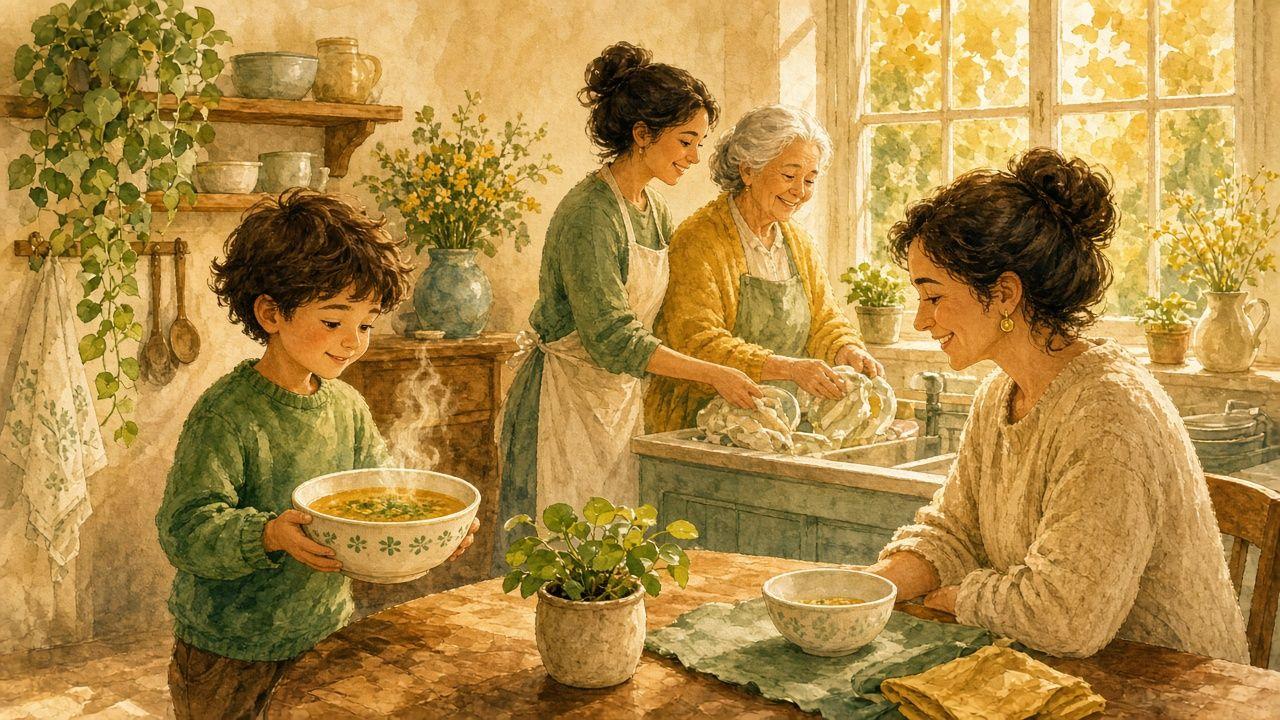
Most of us grew up on the receiving end. Meals appeared. Rides happened. Bills got paid. Somebody remembered our dentist appointment and our favorite cereal. For years, love in our home flowed mostly one way: from our parents to us.
That is how childhood starts, and it should. A baby can only take. But a family where love only ever flows one way is missing something. At Childing, we believe children of every age can be givers to their parents, not only takers. Love in a family is a two-way street.
A Chinese saying puts it simply: love isn't just words; it takes real giving. Here is how that same idea already lives in Western faith, psychology and everyday wisdom, and how families can practice it.
Love in Deed and Truth
The Bible says it almost word for word:
My little children, let's not love in word only, or with the tongue only, but in deed and truth. (1 John 3:18 (WEB))
Saying "I love you, Mom" matters. But the letter of John asks for more: love that shows up in what we do. Paul makes the same point about family when he writes that children and grandchildren should put their faith into practice by caring for their own family and so repaying their parents. Jesus even warned against people who used religious-sounding excuses to avoid caring for their parents. Honoring parents was never meant to stay in words.
Actions Speak Louder Than Words
We already have the English proverb for this: actions speak louder than words. Many couples also know the idea of "love languages," and one of them is acts of service: showing love by doing something helpful for the other person.
Parents speak that language every day. Packing lunches, washing clothes and driving to practice are all acts of service. When children learn to speak it back, even in small ways, love becomes a conversation instead of a one-way broadcast.
We Value What We Give To
Psychologists have noticed something simple: people tend to value what they put effort into. One version is called the IKEA effect. When we help build something, even a plain bookshelf, we usually care about it more than one we just received.
Family works the same way. A child who only receives may take home life for granted. A child who helps cook dinner, fold the towels or care for a sick parent has put something of themselves into the family. That investment tends to grow attachment and gratitude. Giving to our parents doesn't drain love. It deepens it.
What Money Teaches
Money is one of the clearest lessons a home gives. If children only ever receive, from allowance to phones to tuition, they can quietly learn that love and resources flow one direction only.
Giving back teaches the other half. A young child can use part of their own savings to buy a parent a small treat. A teenager with a first job can treat the family to dinner. A young adult can set aside part of a first paycheck as a thank-you, an old custom in many cultures. One tradition says to offer your first harvest of gratitude to the parents who planted the seeds. The amount isn't the point. The direction is.
Ways to Give at Every Age
Young children (about 3 to 7)
- Help set the table or carry groceries. Small jobs, done gladly, are chores as contribution, not chores for pay.
- Say thank you for meals and rides, and mean it. Gratitude before gifts is a habit kids can start early.
- Make a card or drawing for no reason.
Older children and teens
- Do chores without being asked twice. An old Chinese teaching says that when parents call, answer right away and don't be lazy.
- Cook one simple meal a week for the family.
- Put the phone down and really listen when a parent talks about their day.
- Use some of your own money for a parent's birthday gift. Our chores checklist and the story of Lily the factory boss show how kids can grow into real contributors.
Adult children
- Share part of a first paycheck, or treat your parents to a meal.
- Call regularly, visit when you can, and help with the jobs that are getting hard for them.
- Cook their favorite dish for them, the way they once cooked for you.
- Give your time and attention. Our guide to thoughtful gifts for elderly parents has ideas that aren't things.
Confucius noticed that chores are the easy part. The harder part is serving with a pleasant face. Giving with a warm heart, not a sigh, is what makes it love.
A Note for Parents
Letting children give can feel strange. Many parents would rather do everything themselves. But accepting your child's help is a gift to them. It tells them they matter to the family, and it teaches them how love works.
So say yes when your child offers to help. Thank them sincerely. Let them treat you once in a while. You are not taking from them; you are teaching them to give.
The Circle Comes Back Around
An old Buddhist teaching puts the promise of a grown child plainly: "Having supported me, I shall support them." Our parents gave first. When we give back, in deed and in truth, the street runs both ways, and the family grows stronger for it.
Start today with one small thing: a chore, a call, a meal, or a real "thank you."