September 1, 2026 • By Childing Team
The Sacred Vigil: Providing Peace During Your Parent’s Final Days in Hospice
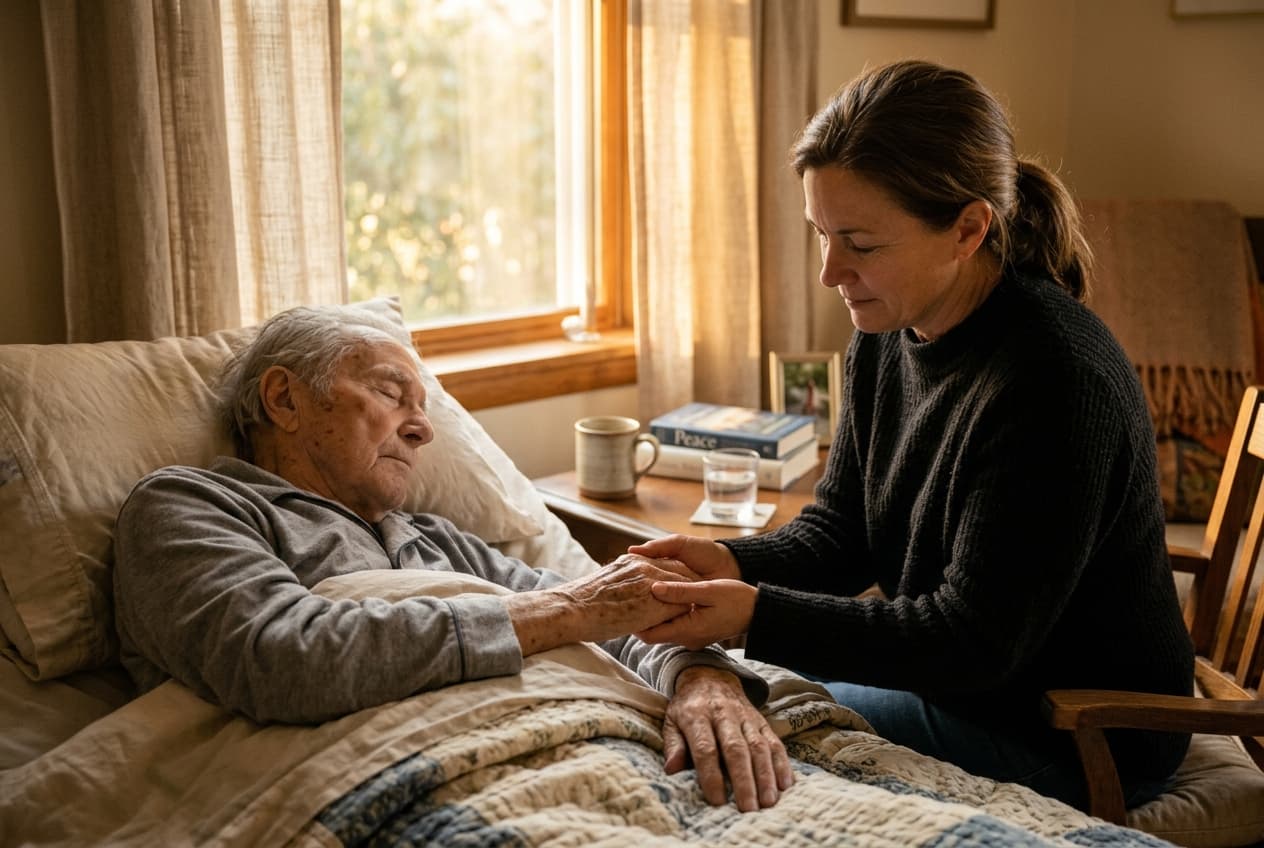
There is a profound difference between caring for a parent who is aging, and standing vigil for a parent who is actively departing.
As adult children, we spend years trying to protect our parents from decline. But when Phase 4 of honoring parents (The Vigil) arrives, everything changes. Whether you are walking through the "long goodbye" of cognitive decline like Alzheimer’s, or facing the sudden reality of hospice, this season can leave you paralyzed by anticipatory grief and a feeling of profound helplessness.
However, this is also the most sacred season of filial piety (childing). It is no longer about fixing or curing; it is about providing ultimate dignity and absolute presence.
Here is how to navigate the heartbreak of end-of-life care, honor your parent's vessel when their mind fades, and find peace during the sacred vigil.
1. The Long Goodbye: Navigating Dementia and Alzheimer’s
If your parent is battling cognitive decline, you are experiencing "ambiguous loss." They are physically present, but psychologically absent. You are grieving someone who is still sitting right in front of you.
The core principle to survive this season is a shift in perspective: You are no longer honoring their memory; you are honoring their vessel.
Even if their mind is clouded and they no longer recognize your name, their soul and their body still recognize the vibration of love, the feeling of safety, and the warmth of a familiar touch.
To honor them now, you must stop correcting them. If they believe they are in a different decade, or waiting for a spouse who passed away years ago, do not force them into your harsh reality. Step gently into theirs. Validate their emotions, hold their hand, and offer them the dignity of simply being accepted as they are in this exact moment.
2. The Shift from Curing to Comforting (Hospice)
Entering hospice care is often an agonizing medical pivot for families. You must accept that the goal is no longer to prolong life, but to maximize comfort.
During this time, you must step into the role of the fierce protector. You are their advocate in clinical settings, ensuring they are not in pain and that their dignity remains completely intact as their body shuts down.
Logistics also play a massive role in creating peace during this transition. Scrambling to find legal papers while a parent is actively transitioning adds unnecessary trauma. Ensure you have completed an End-of-Life Document Checklist and Hospice Essentials well in advance, so your focus can remain entirely on your parent, rather than on paperwork.
3. Holding Space During the Sacred Vigil
What does it actually mean to "hold vigil" for someone in their final days?
It means sitting in the heavy discomfort of silence without panicking or trying to fix it. It is the ultimate act of presence. Your presence is the anchor that keeps them from feeling alone in the dark.
Create an environment of profound peace:
- Dim the harsh lights and keep the room softly illuminated.
- Play their favorite music or gentle, familiar instrumental hymns.
- Speak softly to them, even if they are unresponsive. Hearing is often the last sense to go.
- Give them permission to let go. Often, parents will hold on through immense pain because they are worried about leaving their children behind. Whisper to them that you will be okay, and that they are allowed to rest.
4. Releasing the Need for "Cinematic" Closure
Many adult children wait for a Hollywood-style deathbed conversation—a moment where all past sins are apologized for, thanks are expressed, profound wisdom is imparted, and all loose ends are tied up.
If that does not happen, or if dementia makes it entirely impossible, you must find a way to forgive yourself for the unsaid.
You do not need a cinematic apology to find closure. You can grant yourself closure simply by being there. The act of showing up, of washing their face, of holding their fragile hand as they transition—that is your closure. It is the final, beautiful completion of the circle of life.
You Do Not Walk Alone
The ultimate act of a filial child is to ensure their parent does not walk those final steps alone or in fear. And in return, you shouldn't have to walk this grief alone either.
If you are currently navigating this season, take comfort from family and friends, and lean into the spiritual frameworks that have guided humanity through death for thousands of years. Explore our All 12 Faith Traditions Bundle to draw upon the deep spiritual wisdom of your family's specific religion, finding comfort, rituals, and profound peace during this transition.